Put the Voters in Charge!
“Voter sovereignty is as much about self-respect as it is about self-government.”
—Dahlia Hart, Founder and Director of the Democracy, Straight-Up! Project

BREAKING NEWS : Straight-Up Democracy will be easier, not harder, than the current system!
Read the full story!
Let’s put the ‘Aaaah!’ back in democracy.
We can break the two-party grip on government and put the voters in charge of lawmaking.
We will no longer be forced to choose the lesser of two evils.
We can get rid of winner-take-all politics and give everyone a meaningful voice and vote.
We will no longer be silenced by a system that treats us as political subjects. We will rule.
We can get rid of electioneering—campaigning, fundraising, advertising, and the permanent scramble for political office.
We will spend our time addressing real problems, not creating fake ones.
We can get rid of ‘elite capture.’
The voters, not the politicians, will be in charge of the final vote.
We can stop handing our political power to someone else every Election Day.
We will keep our decision-right in our own hands, where it belongs.
We can have representatives who carry our decisions instead of making our decisions for us.
Representation will become delegation
We can stop honest disagreement from being weaponized against us.
We will agree and we will disagree. But we will do so on our own terms and with self-respect.
We can let ordinary citizens serve in Congress and abolish the concept of the ‘politician’.
We will replace political careers with public service.
We can separate wealth from political control!
We will create a system that will be good for wealth!
We can create a new center of power for democratic control of self-government.
Ideas alone will not reorganize power. Power will reorganize power.
We can make democracy easier, not harder
Many hands make light work! Not convinced? Let us convince you!

Overview
The Democracy, Straight-Up! Project is a federally recognized 501(c)(3) corporation with a very specific and immediate mission:
Our Mission:
To see the first Straight-Up Representative sworn into the United States House of Representatives on January 3rd, 2029, in at least one of the 435 US congressional districts.
This can be done without changing any laws or the constitution, and without asking for permission from the powers that be.
A Straight-Up Rep represents an organized, self-assembled legislature open to all the voters in a district. We call this new entity a Directly-connected Legislature or DcL, pronounced ‘diesel,’ and giving birth to the slogan, “We call it a ‘diesel’ because it is the engine of democracy!” (See The Plan)
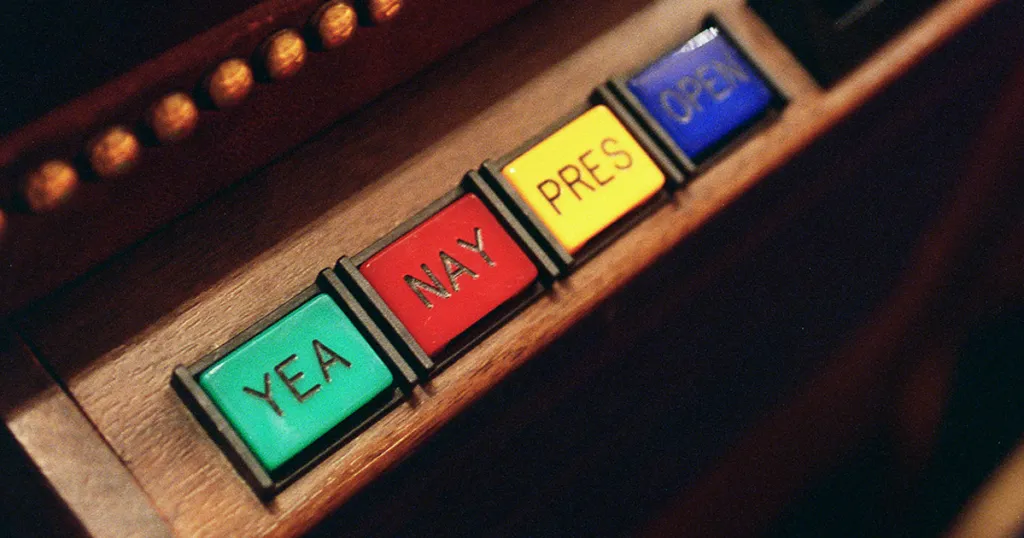
This legislature is directly connected to the vote on the floor of the US House because each voter in the DcL has a direct vote on each bill, and the Straight-Up Rep votes with the majority when they cast their vote. (see The Philosophy)
A Straight-Up Rep is someone who has been selected by the voters in the DcL, put on the ballot, and voted into office in the usual way.
A DcL will need to aggregate 100 to 200 thousand members to secure the seat in the name of the voters.
This is what we call ‘the tip of the wedge’: getting that first Straight-Up Rep sworn in, thus changing the reality of democratic self-government forever. (See The System)
It is important for stakeholders to understand that this event is expected to trigger something we call a phase transition to a new political attractor state—the kind of democracy you’ve been dreaming of. (Read Recursive Direct Democracy)
The Democracy, Straight-Up! Project will promote the use of the free online platform we’ve created, The Claim Your Seat Voting Portal, as the organizational system that the voters can use to self-assemble their DcL.

Why ‘Straight-Up?’
First, because it ensures that every vote by every voter goes ‘straight-up,’ with equal consequence, to the final vote on the floor of the US House of Representatives. Issue by issue, bill by bill.
But ‘straight-up’ has another meaning, as we all know: it means ‘truly, honestly, and completely.’
One of our slogans for promoting our work is ‘Democracy with Dignity.’ ‘Democracy,’ as we experience it right now, is fraught with moral compromise. Yes, such is life, but there are ways in which the current system is painfully humiliating, even for those with good intentions. Party politics, candidate selection, campaigning, fundraising and elite capture. We take for granted that it turns its participants into cynics.
It is a system that fosters corruption, the knowing distortion of the popular will, and the concentration of control in the hands of a small group of power players, disconnected from popular rule. We’ve been putting up with it for centuries.
We don’t have to live like this.
A Start-Up Opportunity of Historic Proportions
The project is currently seeking funding and staff. Our current funding effort is:
Full-Time Founder Execution which spans from July 1st, 2026 to January 1st, 2027. We are currently calling for $9,175 dollars in start up funding to complete this phase of the project.
We have made it possible to put the voters in charge.
Please read about the Philosophy, the System, the Plan and the Project. Then come back here…
Did you do it? It’s a lot, right? Look, there is no way we would ask you to drop everything else and start dedicating your time and money to this project if we weren’t absolutely certain that this project would do nothing short of saving humanity.
But the task before the voters can be summed up in four straight-forward steps:
Sign-up
Join a Circle
Get Connected
Push the Button
This may sound like a quirky little list. It is actually quite easy to understand. And once understood, it is easy to do. And once done—everything changes forever, and for the better!
These four simple steps make a complex system accessible to every voter who wants to participate.
To learn more about what exactly the Four Steps entail, why not Ask Tiffany!
Who is the Audience for this Website?
You may notice we don’t have the traditional doom-and-gloom ‘convince the audience that there is a problem’ section at the top of this site. If you don’t already see that there is a big, big problem, we’re not going to convince you in a few paragraphs!
But everybody knows that the current system is dumpster fire. We just don’t know what to do about it, and too many years of false progress have demoralized us. What we need to get across is that there is a viable alternative, an open door leading to genuine self-government that does what we tell it to do.
And seeing that alternative is mostly about overcoming fear.
But what about ‘the average voter?’ Well, we are all ‘voters’ average and otherwise. Some of us are going to get enthusiastic sooner than others, ‘early adopters,’ and do the foundational work. There are always enough people like that, by the way looking for something like this—we just have to connect with them.
(There is a paper which is relevant: Participation Burdens and the Natural Supply of Participants. Read it, or Ask Tiffany to summarize it for you.)
But as for the large majority of voters—they don’t need to be mobilized at this stage because they are already mobilized! They want this power, and they just need a means to exercise it. Once we get it started, we are looking at a crystallization process, not a mobilization.
Read our position paper, The Voters are Ready (Already)!
But you—you need to be mobilized. This first stage of the process is directed organization which will give way to self-organization. It is planned development leading to organic growth. It is a brief, centralized, top-down effort leading to a permanent, decentralized bottom-up system. It is construction leading to emergence.
We do not need to appeal to the ‘average voter.’ They are more than ready to do what needs to be done. They are just waiting for the chance to do it. They are waiting for us to create the organized system of self-government that they can inhabit and start using.
Who is us? ‘Us’ is you! This is about you getting off your ass and joining the all-out push to ‘give birth’ to a democracy. (We say that with love. ❤️😘🥰💘😻)
If you are imagining a mass movement where the voters demand direct democracy, you are thinking in terms of the legacy system. If we needed to change the constitution, change the law, or beg the powers that be for permission—that would, indeed, require an upsurge of ‘people power.’
But in the Straight-Up scenario, the upsurge happens in stages, organically, and only after we have succeeded in our task—creating the first Straight-Up legislature in a US congressional district. (See The Plan)
It is the difference between designing a car and getting it to market, and buying the car and driving it. We are the engineers. The voters are the drivers.
Join the team. Contact@StraightUpDemocracy.Org
To join us: join@straightupdemocracy.org

A Thought Experiment
Hear us out on this one. As it stands, the voters vote for their own bosses. But what if the voters were ‘the boss?’
That is, they own the company. They get the final say-so. They don’t do everything themselves—no ‘boss’ does. They hire people with the skills and experience they need to make things run. They delegate work and responsibility as they see fit. They try to build a good team that will serve their vision and make good choices.
But they still own the company. The vision—and the final decision—belongs to them. They have hiring and firing power. And their employees have to do what they say.
So, now just think of every representative in congress that way. An employee. It’s their job to get the boss the information they need; to learn their priorities and strategize to carry them out; to give them good advice, but at the end of the day, act on their final decision in good faith.
It’s easy to imagine a representative as an employee. There are a relatively small number of representatives. But 200 million voters as one, singular boss?
That’s a lot harder to imagine! But not impossible…
That’s why we have a ten-week program so you can study how that works.
Taming the Beast
Between The Philosophy, The System, The Plan and The Project, we’ve created a bit of a four-legged beast! Try to remember how much you love four-legged beasts!

Standing on Four Legs
Read about the Philosophy to convince yourself that advocating Straight-Up Democracy would be the right thing to do—if only in theory...
Read about the System to learn how the theory can be made into a general architecture for self-government and implemented in the US—if only we had a plan…
Read about the US plan for how a self-assembling legislature of the voters can be created at the national level in the United States—if only there were a group strong enough to make that happen…
A Sprint, not a Marathon
Good news!
We don’t need to improve the skills of the voters. We just need to put them in control of the system. We’ve written a position paper on that very topic.
We don’t need a new theory of civic engagement or deliberation before we proceed. Decades of research have already answered the threshold question: ordinary people can learn, deliberate, cooperate, specialize, and govern. Here’s another position paper: The Voters Are Ready. What they lack is a consequential place to put those capacities to work.
And we don’t need to set up the perfect form of self-government before we put the voters in charge of it. This is engineering—it just needs to be good enough to work. In any case, much of the design work is more properly left to the voters once they are in charge of the system. Read about this in The Straight-Up system.
What we need is a strong group of talented people all pushing in the same direction.
Reach out. join@straightupdemocracy.org

Read about The Democracy, Straight-Up! Project! The threshold coalition that you can join and strengthen until we get the job done!
That Thing You Do!
We all get exasperated with the legacy system and we think, “Yeah, but it is the way it is. There’s nothing you can do about it.” Not any more!
Thing 1:
Do you love to indulge that cerebral cortex of yours? Well, we have laid out a feast for you!
In addition to the four summary sections below, we have created over a dozen thought-provoking and-highly informative papers and monographs.
Peruse the papers! If you have questions as you read, Ask Tiffany!
Thing 3:
Get Ready to use the Claim Your Seat Voting Portal which launches on November 3rd, 2026.
Thing 4:
We’ve set up a place to get started talking about The Philosophy, The System, The Plan and The Project.


Join us as we rewrite The Tragedy of the Commons to give it a happy ending!
Thing 5:
Thing 7:
Calling All Policy Wonks!
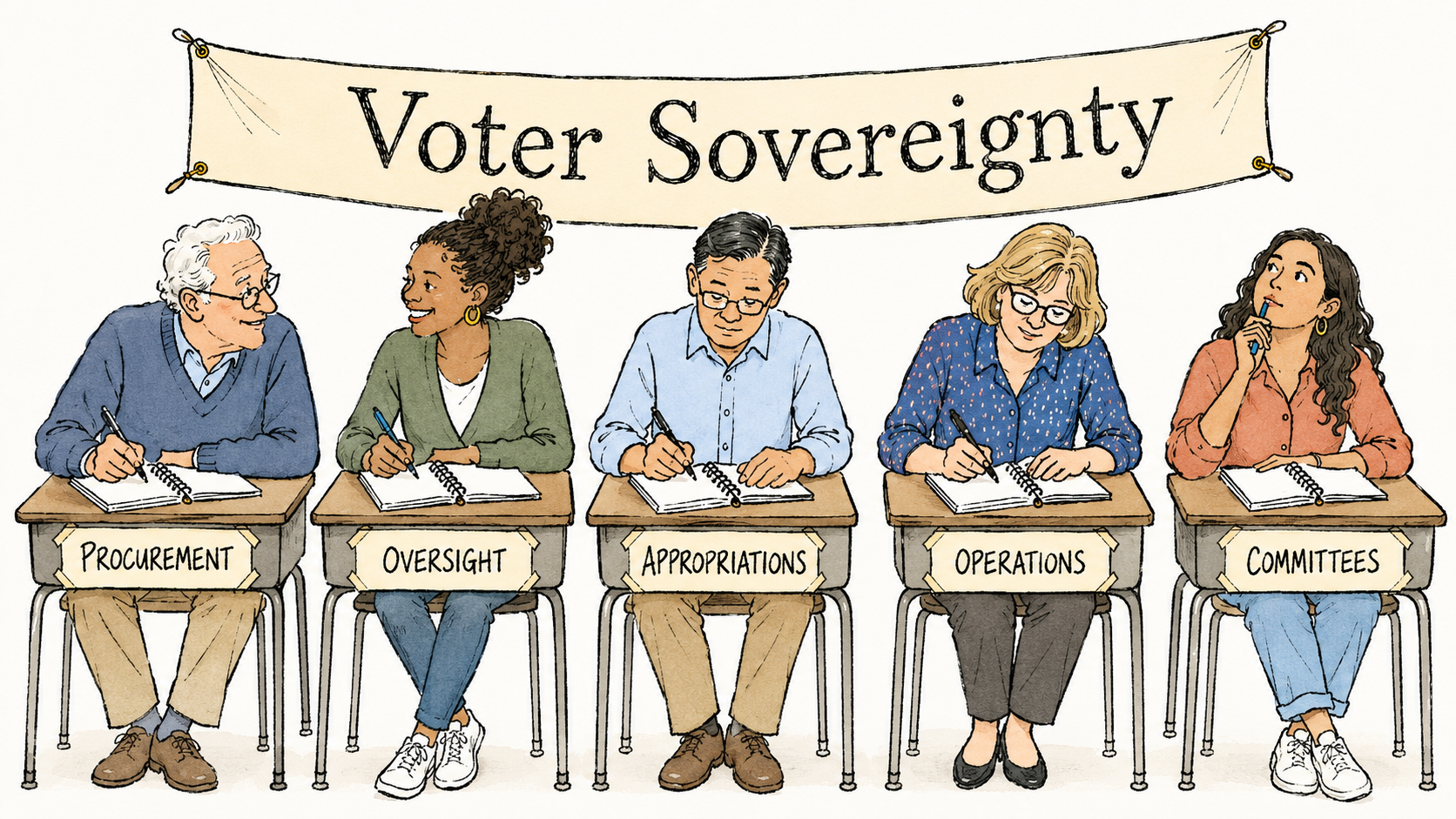
Once the voters are in charge, they are going to need to implement new systems for appropriations, earmarks, Community Project Funds, committee selection—just to name a few. What do those things look like when there is no longer a two-party system? When decisions are made based on need? When the whole system will need to implement sortition bodies of all kinds?
The voters need your help!
To be clear, the decision as to whether or not to adopt a particular scheme will still belong to the voters. But they will be shopping for ideas.
Roll up your sleeves and get started!
Thing 8:
Social Media Madness
We have a damning analysis of social mediahere at the project when it comes to its usefulness—or lack thereof—in a democracy. We are not fans!
But we gotta use it to the extent possible. Right now, there is no choice. However, we look forward to a better future. Through the system of DcLs we are building, we’ll be creating a better marketplace for your ideas. In the meantime, we are stuck with the current situation—a marketplace in the middle of a battlefield.
We are working hard to ensure that this will be the last time you will be forced to engage in the restroom wall that is social media to gain awareness for your political ideas.
Even if you sign up, follow and ignore it, you’ll be doing us a great boon. Liking and reposting, forwarding and commenting all help drive our message up the toxic algorithm. Those efforts don’t really take up much time. Please play our videos, share them, subscribe, and help us reach more people. Just hold your nose and do it. (Sigh)
Hit the Books!
Proving Democracy is a ten-week inquiry into democracy, political power, and the institutions through which we govern ourselves. We examine representation, elections, political parties, deliberation, expertise, and direct citizen participation, continually returning to one deceptively simple question: Who casts the final vote that makes a law?
Thing 6:
Become a Direct Democracy Doula!
What’s that? It’s like a program coordinator for developing DcLs. But more fun! In our analysis, the only thing preventing voter sovereignty in America is fear. Learn how to help a district deliver a bouncing baby democracy!


Ask Tiffany!
Our AI Assistant, Tiffany Engels, is being carefully trained to answer any and all questions about Straight-Up.
Still in beta, so we’d appreciate it if you report any hiccups: Tiffany@StraightUpDemocracy.Org
And it also costs money, so as you use it, consider donating!
Otherwise, ask away!

To make delegation accountable rather than surrendering power. Delegates can study, negotiate, communicate, and coordinate—but they do not own anyone’s vote. A voter can withdraw delegation, and a group can replace its delegate. That makes delegation a tool for sharing work, not a transfer of sovereignty to a new political class.
To work with actual people rather than an anonymous political mass. The System uses voluntary, human-scale Circles and connected layers so people can know who is doing work on their behalf, ask questions, convey concerns, and change course when needed. It is designed to make large-scale coordination possible without demanding one giant district-wide conversation.
To gain agency even when one’s side loses a particular vote. A voter will not always get the outcome they want. Straight-Up does not promise that. Its claim is more basic: people subject to the law should retain equal standing in making it. The disagreement remains, but no one must first surrender their legislative voice to a representative in order to take part.
The “regardless of ideology” piece matters because the shared interest is not agreement on policy. It is agreement on who gets to decide policy. A conservative, socialist, libertarian, liberal, or voter with no settled label can all want the same institutional change: that the public retain the legislative decision-right, while using delegates and experts as helpers rather than rulers.
That does not mean Straight-Up itself dictates what laws voters will pass. It changes who owns the decision; voters could then use that authority to adopt, reject, or revise policies across the ideological spectrum. The System expressly leaves substantive political issues to the people who acquire the power to decide them.
We asked Tiffany the question:
“I understand that the Straight Up Plan involves providing a software that would allow voters to self-assemble a legislature of the voters, regardless of political ideology. Why would the voters even want to do that?”
Ask Tiffany says:
“Because it gives them something ordinary politics does not: a continuing share of the actual legislative decision.
In representative government, voters select people who then possess the legislative decision-right for a term. Voters can try to influence those officials—by writing, protesting, donating, organizing, or voting next time—but the final decision is someone else’s. Straight-Up’s central proposition is that choosing who will govern you is not the same as governing yourself.
A voter might therefore want to join a Directly-connected Legislature (DcL) for several practical reasons:
To stop buying an ideological package deal. A person may agree with one party on climate policy, another on wages, neither on guns, and have a view all their own on foreign policy. In an election, they must typically choose a candidate or party bundle. In a DcL, the aim is to let them vote—or delegate their vote—issue by issue. They can win on some questions and lose on others without having to join a permanent political tribe.
To have a real route from opinion to outcome. The portal is not intended as another petition site or opinion poll. It is meant to connect each participating voter to legislative decisions, to a human chain of assistance and revocable delegation, and ultimately to the district’s House vote. If the DcL gains the electoral strength to elect its candidate, its Representative is politically committed to carrying the district’s recorded decision into Congress.
To participate without making politics a second full-time job. Straight-Up does not require every voter to research every bill or attend every meeting. A voter retains a direct vote, but can leave a particular decision in proxy mode, rely on people they trust to do more of the research and political labor, then reclaim or override their vote before the House vote closes. In short: equal authority does not mean equal workload.
Choosing who will govern you is not self-government.
When it comes to the laws that limit our freedom, elections allow voters to choose among candidates, parties, platforms... But after the election, who has the final vote? The voter may petition, protest, organize, donate, campaign, call, write…wait. The decision still belongs to someone else.

The Straight-Up philosophy asks what democracy would look like if voters could organize at scale without giving up their right to control their own freedom.
The Straight-Up…
Supplies the reason…
Supplies the form…
Supplies the path…
Does the work.
The Straight Up Philosophy
Why should the people govern themselves?
The philosophy begins with human agency, equal political standing, and the unavoidable fact that collective rules shape the freedom of everyone subject to them.
It examines democracy, hegemony, authority, representation, political knowledge, institutional power, and the difference between choosing a government and governing.
It asks whether people can divide the work of government without dividing themselves into rulers and ruled.
The Straight-Up Plan
How could voters begin building that system now?
The Plan begins inside existing congressional districts.
Voters form small Circles, connect those Circles through Links and Legislative Caucuses, and use the Claim Your Seat Voting Portal to deliberate, organize, and vote.
Eventually, a Straight-Up Representative carries the district’s decisions into the United States House of Representatives.
The voters do not merely advise the Representative. They direct the House vote.
The Straight-Up System
What structure would make self-rule possible at scale?
The Straight-Up System combines four conditions:
Voter sovereignty.
Human-scale affinity groups.
Layered aggregation.
Revocable delegation.
Together, they allow knowledge, proposals, recommendations, and political labor to move through a large population without transferring ownership of the final decision away from the voters.
The Democracy, Straight-Up! Project
How do we make it real?
The Project is developing:
a course in the Straight-Up philosophy;
the Claim Your Seat Voting Portal;
the institutional design and research program;
the public launch and marketing campaign;
the first community of people capable of piloting and building the system.
This is not a finished institution asking to be admired. It is a serious attempt to create one.
THE SOFTWARE
FROM THEORY TO PRAXIS
The launch is the pilot.
On November 3, 2026, we plan to launch the first version of the Claim Your Seat Voting Portal.
The portal is designed to make things easier for voters as they take control of congress.
They do this by signing up, forming Circles, Links and Caucuses, building a Directly-connected Legislature where they can delegate legislative work, and retain direct control over their own votes.
This is not civic engagement software to be used by the legacy system as an ‘advisory’ mechanism.
This is the creation of a new center of power capable of transforming a godawful mess into a lean, mean, will-of-the-people-generating machine!
